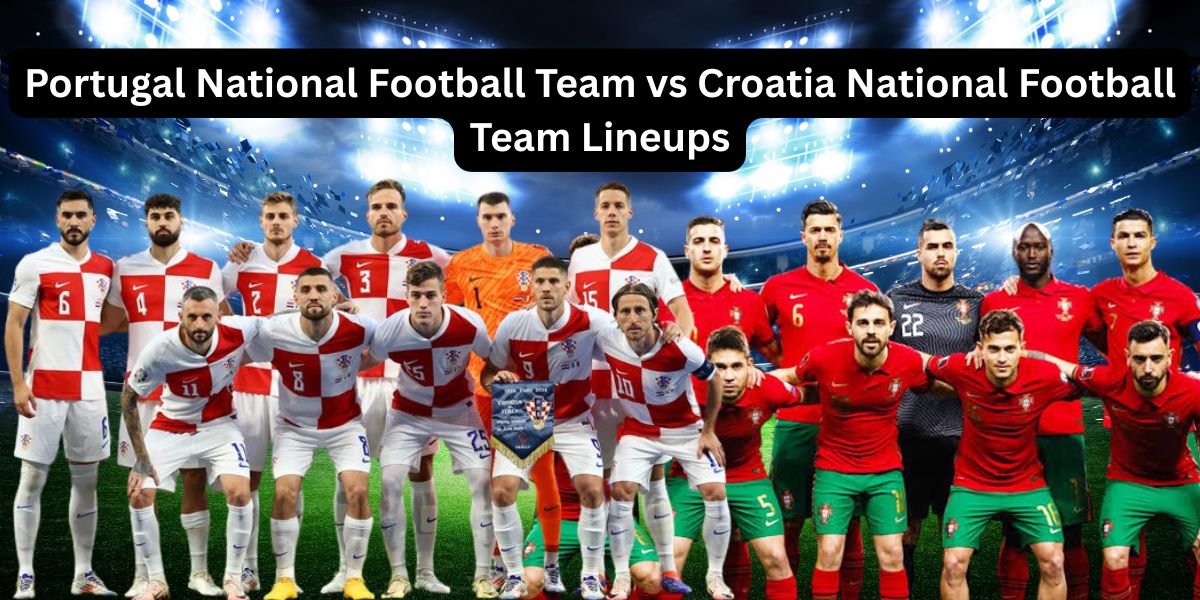
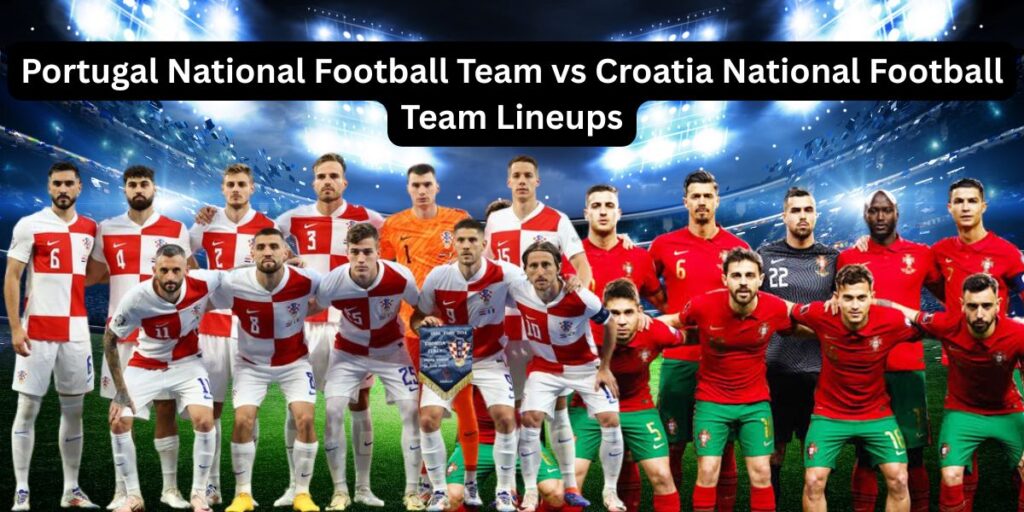
Portugal National Football Team vs Croatia National Football Team Lineups
When Portugal faces Croatia, the lineups define more than starting XI they reveal each coach’s blueprint, each nation’s identity, and match narratives before kickoff.
In this article you’ll see:
- Recent lineup structures from key fixtures
- Tactical logic behind player choices
- Head-to-head comparisons and anticipated changes
- Insights valuable for fans in Portugal and Croatia
Recent Head-to-Head: Key Fixtures & Lineups
Also Read;
- Argentina National Football Team vs Ecuador National Football Team Lineups
- Argentina National Football Team vs Australia National Football Team Lineups
November 2024, Nations League: Croatia 1 – 1 Portugal
Croatia used a 3-4-3 formation in that match.
- GK: Dominik Livaković
- CBs: Josip Šutalo, Duje Ćaleta-Car, Joško Gvardiol
- Wing-backs: Ivan Perišić (right), Borna Sosa (left)
- Central Midfield: Luka Modrić (Captain), Mateo Kovačić, Kristijan Jakić
- Attack: Andrej Kramarić (right), Igor Matanović (center), Martin Baturina (left)
Portugal countered with a 3-5-2 lineup:
- GK: José Sá
- CBs: Tomás Araújo, Renato Veiga, Nuno Mendes
- Wing-backs: Nélson Semedo, João Cancelo
- Midfielders: Otávio, João Neves, Vitinha
- Forwards: João Félix, Rafael Leão
In that match, Gvardiol scored the equalizer for Croatia after coming via a cross from Jakić.
That goal shifted momentum and showed the strength of using defenders in attack.
June 2024 Friendly: Portugal 1 – 2 Croatia
In that friendly, Cristiano Ronaldo started on the bench, giving room for emerging names.
Croatia’s lineup featured Modrić, Budimir, Pašalić in attack and midfield roles.
Portugal fielded defenders like Nuno Mendes, Inácio, Dias, and attackers Bernardo Silva and Bruno Fernandes.
Croatia won 2–1, securing their first ever victory over Portugal in national team history.
Tactical Logic Behind The Lineups
Why Croatia often uses 3-4-3 / 3-5-2
Croatia consistently relies on:
- Compact defense: Three central defenders (Gvardiol, Šutalo, Ćaleta-Car) provide solidity against Portugal’s forwards.
- Wing-back aggressiveness: Perišić and Sosa push forward, adding width and crossing avenues.
- Experienced midfield spine: Modrić and Kovačić control tempo; Jakić or Sučić adds defensive cover.
- Flexible attack: Kramarić, Matanović, Baturina interchange, confusing defenders.
This structure turns into a 5-4-1 without possession, compact and disciplined. With ball, it becomes expansive, stretching flanks.
Why Portugal uses 3-5-2 / transitional shapes
Portugal’s lineup choice reflects a transitional approach:
- Midfield dominance priority: With 5 in midfield (Otávio, Neves, Vitinha + wing-backs), Portugal aims to control the center.
- Wing-back dynamics: Semedo and Cancelo act as full-backs and as wingers, giving both width and overlapping runs.
- Forward pairing: Félix and Leão (or another forward) exploit spaces between lines, forcing Croatia’s defense to stretch.
- Adaptable defense: With three center-backs, Portugal can adjust to 4-2-3-1 or even back four midgame if needed.
In matches where Portugal needs defensive stability, coaches often shift to a double pivot or a more cautious shape.
Player Profiles & Impact in Lineups
Croatia Key Players
| Player | Role & Impact |
|---|---|
| Joško Gvardiol | Modern defender who can carry the ball forward, scored the equalizer vs Portugal in Nov 2024. |
| Luka Modrić | The tactical brain; he dictates rhythm, controls pace, and links play. |
| Mateo Kovačić | Offers balance between defense and attack, complementary to Modrić. |
| Ivan Perišić / Borna Sosa | Provide width and support in attack down the wings. |
| Andrej Kramarić / Igor Matanović | Leading forwards, making runs between lines and finishing chances. |
Portugal Key Players
| Player | Role & Impact |
|---|---|
| João Neves | Young, energetic central midfielder, already trusted in big matches. Wikipedia |
| Vitinha | Helps link play, carries transitions, also press resistance. |
| Nélson Semedo / João Cancelo | Provide width, overlap, defensive cover; key to transitions. |
| Rafael Leão / João Félix | Bring flair, dribbling, movement behind the defense. |
| José Sá | Reliable goalkeeper, ensuring safety while defense pushes forward. |
Comparison: Strengths & Weaknesses in These Lineups
Portugal’s edge
- Greater depth in midfield and attack allows rotation.
- Strong versatility — they shift between shapes (3-5-2, 4-3-3, 4-2-3-1).
- Wing-backs offer attacking width without needing full width wingers.
Croatia’s edge
- Cohesion and experience — many players have played together for years.
- Defensively resilient — hard to break through compact lines.
- Ability to strike quickly on counters using wing-backs and forwards.
Potential vulnerabilities
- Portugal may lack defensive coverage if wing-backs push too high.
- Croatia’s midfield can get stretched if Modrić is pressured or substituted.
- Portugal’s rotation can cause identity issues when substitutes come on without rhythm.
Trend Shifts & Future Lineups
Recent tendencies
- Croatia begins to integrate younger names — Sučić, Baturina — while retaining the core.
- Portugal is slowly phasing in fresh faces — Neves, Vitinha — while balancing veterans like Bruno Fernandes.
- Tactical flexibility becomes more common: Portugal may shift midgame from 3-5-2 to 4-3-3.
Predicted future lineup scenario
Here is a possible future matchup setup:
Portugal (perhaps 4-2-3-1):
- GK: Diogo Costa
- RB: João Cancelo
- CBs: Rúben Dias, Gonçalo Inácio
- LB: Nuno Mendes
- CDMs: João Palhinha, Vitinha
- Attacking Midfield: Bruno Fernandes
- Wingers: Bernardo Silva (RW), Rafael Leão (LW)
- Striker: Gonçalo Ramos
Croatia (3-5-2 / 3-4-3 hybrid):
- GK: Dominik Livaković
- CBs: Šutalo, Gvardiol, Ćaleta-Car
- Wing-backs: Perišić, Sosa
- CMs: Modrić, Kovačić, Sučić
- Forwards: Kramarić, Matanović
This hypothetical gives both teams balance — Portugal with width and control, Croatia with compactness and counter threat.
How Fans Should Read Lineups Before a Match
If you’re a fan in Portugal or Croatia, here’s how to interpret starting lineups:
- Formation reveals intent — a 3-5-2 from Portugal signals midfield control; 3-4-3 from Croatia signals width and pressure.
- Wing-back choice matters — whether Semedo vs Cancelo or Perišić vs Sosa shows where attacks will come.
- Midfield names show tempo plans — starting Modrić vs Neves indicates whether the match will be deliberate or dynamic.
- Forward pairing vs sole striker — two forwards may aim for early pressure; one striker may hold play until midfield arrives.
- Substitute flexibility — who’s on the bench (e.g. Dalot, Sučić, Budimir) can tell you how the coach plans to adjust.
Case Study:
In the November 2024 game, Croatia’s 3-4-3 with attacking wing-backs created overloads on the flanks. Portugal countered it with a 3-5-2, flooding the midfield and forcing Croatia’s defenders to drop back.
The equalizer by Gvardiol illustrated how even defensive players in a versatile system can influence attack. Portugal’s lineup gave them control for large stretches, but Croatia’s compactness and counter threat kept them dangerous.
In that match:
- Portugal had more possession, built patiently through midfield.
- Croatia allowed possession but struck sharply through wing transitions.
- The outcome hinged on moments — set pieces, turnovers, and individual runs.